Self-leveling mortar is a cement-based, self-flowing floor leveling material that can create a smooth, flat floor. After being mixed with water in the specified proportion, it has good flowability, can level itself over the substrate, and helps repair minor unevenness in concrete floors.
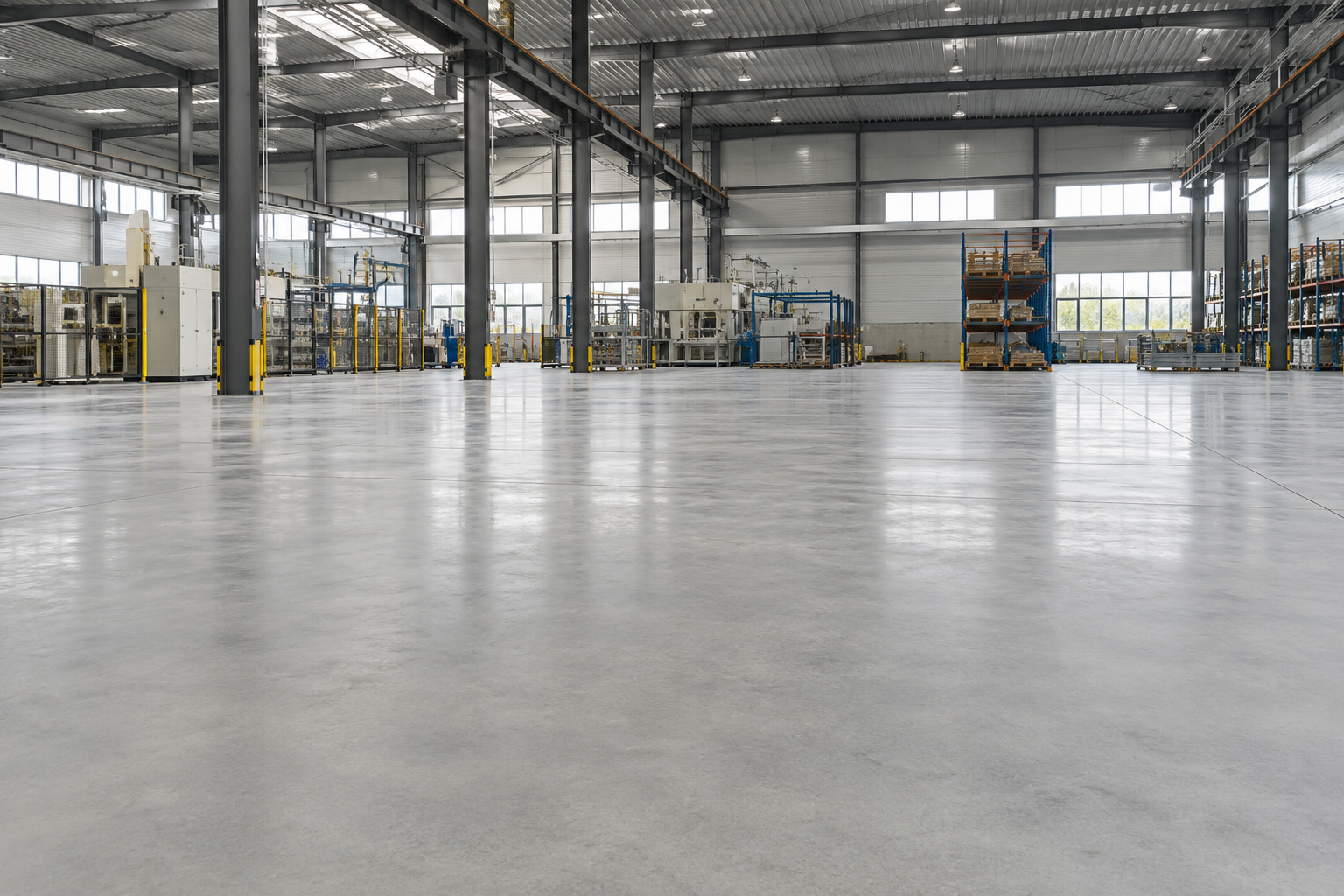
Cementitious self-leveling mortar is often used in factories, warehouses, commercial buildings, residential projects, and other places where a flat floor is required. It can also be used as a leveling layer before the installation of certain floor systems, such as underfloor heating pipes.
What Is Cementitious Self-Leveling Mortar?
Cementitious self-leveling mortar is typically made from cement, graded aggregates, and functional additives. When properly mixed with water, the material can flow across the floor and fill minor low spots in the substrate.
Compared with traditional manual floor leveling methods, its characteristics can reduce the amount of repeated troweling work and improve application efficiency, especially on large floor areas.
How to Apply Self-Leveling Mortar
- Before application, carefully inspect the concrete substrate.
- Clean the Concrete Substrate
Remove dust, oil, loose particles, weak surface materials, and other contaminants from the concrete floor. Before applying the leveling material, cracks, holes, or severely damaged areas may need to be repaired. A clean, stable substrate is very important for reliable application.
- Apply a Suitable Primer
Depending on the substrate and product system, a product-compatible primer may need to be applied before installing the self-leveling material. The primer helps prepare the surface and allows the subsequent leveling layer to be applied more effectively.
- Add Water and Mix
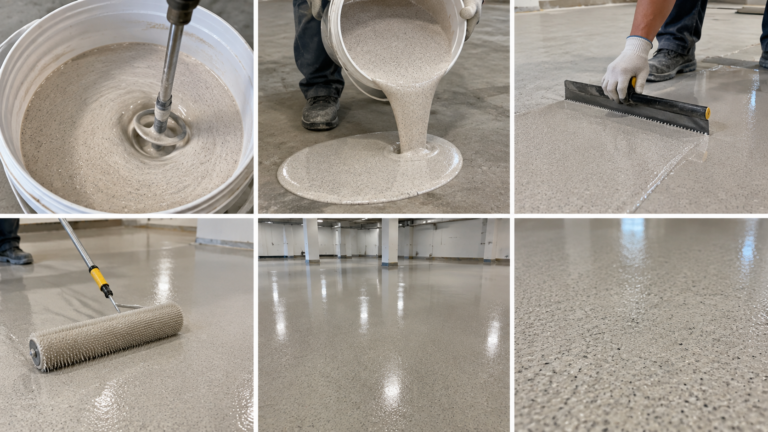
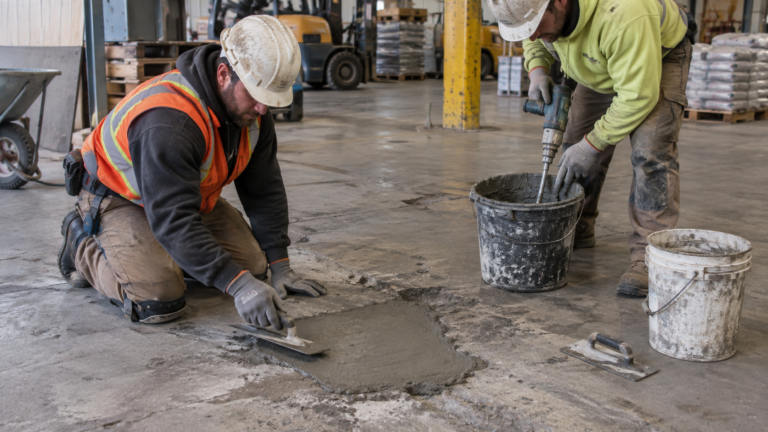
According to the technical instructions for the product being used, add the specified amount of clean water and use mixing equipment to mix the mortar thoroughly until it reaches a uniform, consistent state. Strictly follow the technical instructions during this process and avoid adding excessive water; otherwise, it may adversely affect the strength, surface quality, and overall performance of the material.
- Pour and Spread the Material
Pour the mixed self-leveling mortar onto the floor and let it flow naturally. Suitable tools may be used to assist spreading, and a defoaming roller may be used to remove air bubbles to obtain a flat surface. For large-area applications, mixing and pouring should be reasonably scheduled to reduce visible seams between different batches.
- Allow the Floor to Cure
After application is completed, avoid walking on the floor too early or carrying out subsequent floor work. Estimate the reopening time based on the specific product, application thickness, temperature, humidity, and site conditions. Before reopening the floor to use or installing other floor systems, always follow the manufacturer’s technical data.
Main Advantages of Cementitious Self-Leveling Mortar
One of the main advantages of cementitious self-leveling mortar is efficient leveling. Its flowable characteristics can help reduce the amount of manual leveling work required during application. At the same time, it improves the flatness of the concrete substrate, making subsequent floor finishing work more convenient.
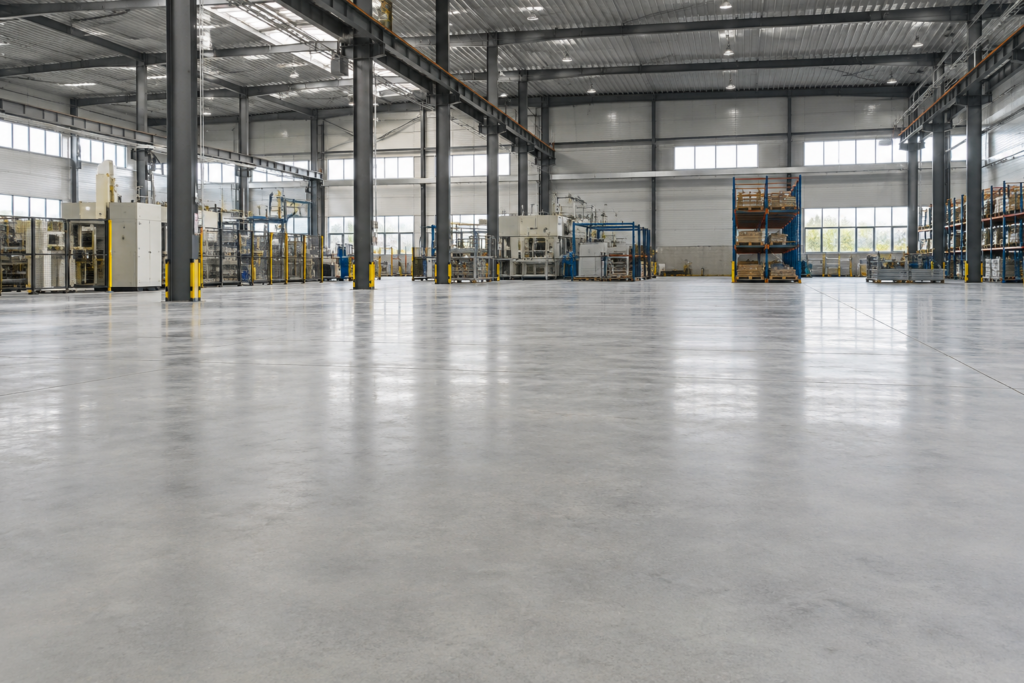
For factories, warehouses, commercial buildings, and other large floor projects, self-leveling mortar provides convenient application and good surface continuity, and meets the requirements of many types of floor preparation work.
Common Applications
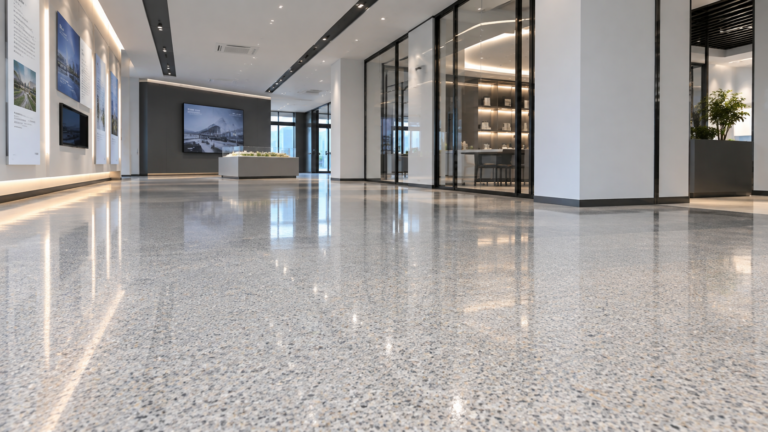
Cementitious self-leveling mortar can be used in: factory floors, warehouse floors, commercial buildings, offices, residential floor leveling, and other scenarios.
Please communicate with the manufacturer in detail based on the condition of the concrete substrate, required thickness, application environment, and requirements of the final floor system.
Conclusion
Cementitious self-leveling mortar provides an efficient solution for creating smooth, flat floors. It depends on on-site substrate preparation, water dosage, mixing, application, and curing.
For different application scenarios such as industrial, commercial, and residential floor projects, always select the appropriate cementitious self-leveling mortar according to actual project conditions and apply it in accordance with the product technical instructions.