Cement-based self-leveling mortar is a flowable floor leveling material used to form a smooth, flat surface on concrete and other suitable substrates. After being mixed with a specified amount of water, it can self-level on the floor and fill small low-lying areas with limited manual leveling.
It is widely used in new construction, interior renovation, and industrial flooring projects that have high requirements for floor flatness and construction efficiency.
Applications in Floor Construction
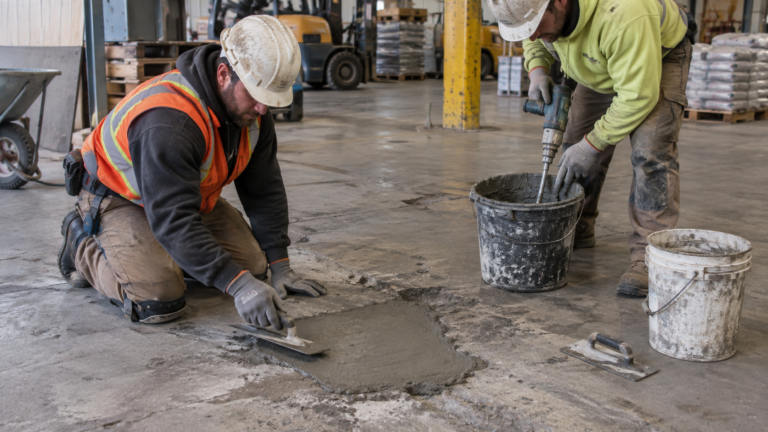
Cement-based self-leveling mortar can be used in factories, warehouses, offices, shopping malls, hotels, hospitals, schools, and residential buildings. It is suitable for leveling uneven concrete floors before installing decorative or functional flooring systems.
In commercial and residential projects, it can provide a smooth base for PVC flooring, vinyl flooring, wood flooring, carpet, tile, and other finishing materials. The selected self-leveling product must be compatible with the final floor covering and site conditions.
In industrial environments, suitable grades of the product can also be used as a leveling layer under epoxy coatings, polyurethane systems, or other heavy-duty flooring materials.
Applications During Construction
The substrate should be solid, clean, and free of dust, oil, loose particles, and standing water. Cracks and deep holes should be repaired before applying the self-leveling material.
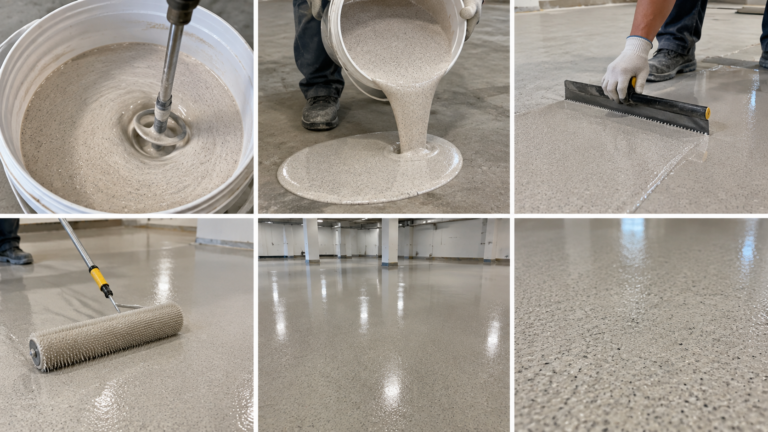
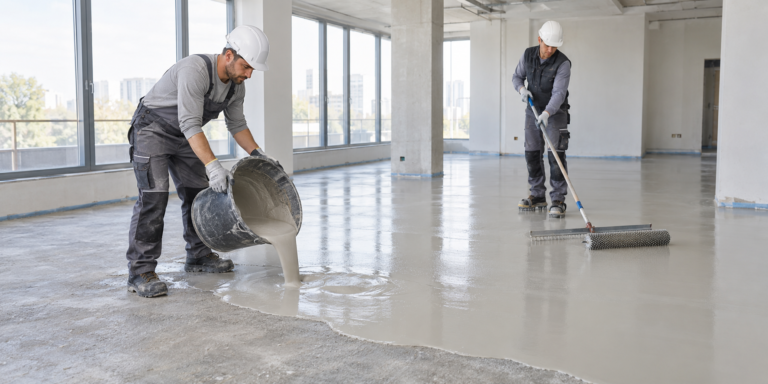
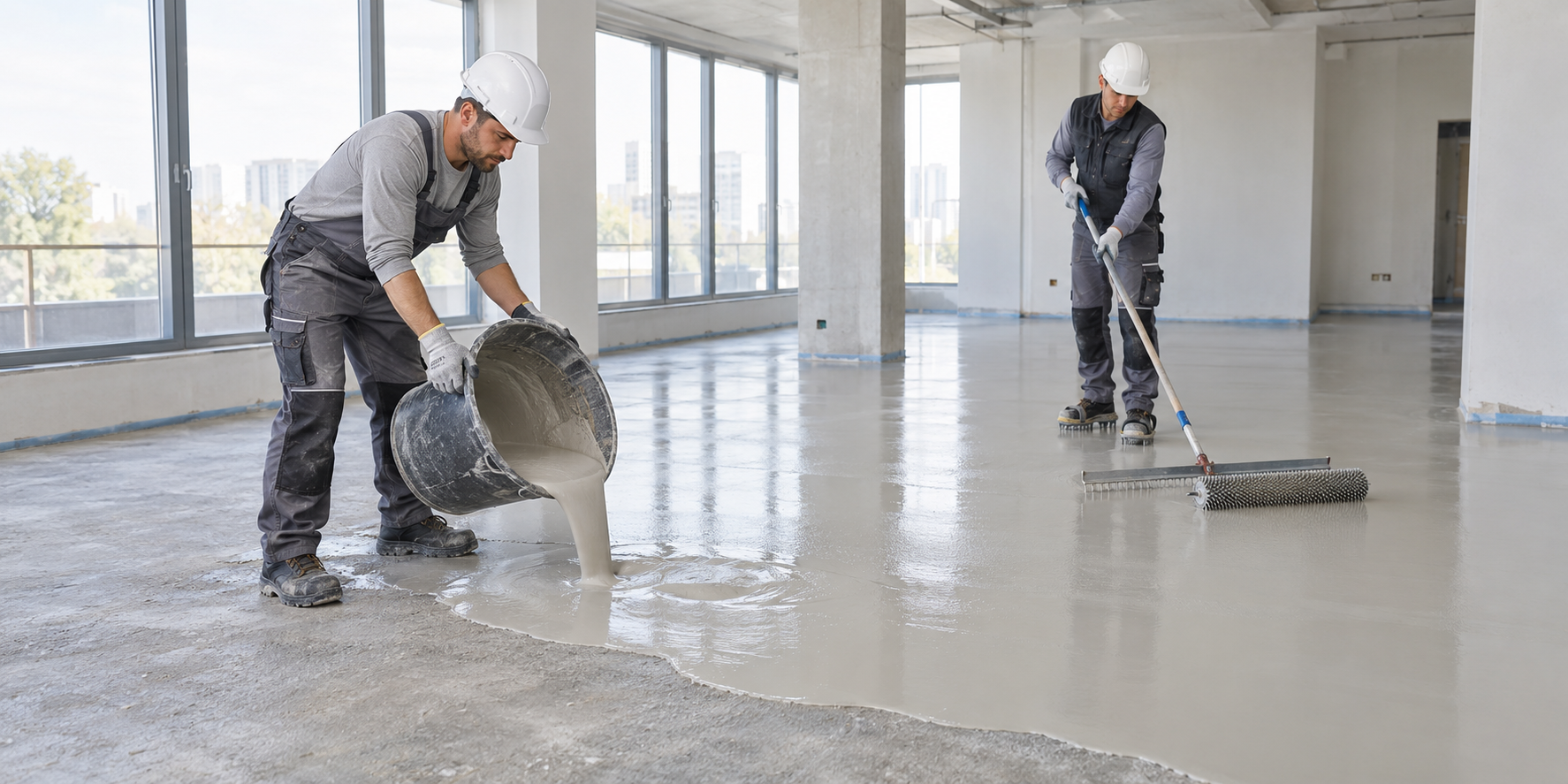
Usually, a suitable primer is applied to improve adhesion and control the water absorption of the substrate. Then the mortar is mixed with clean water in the recommended proportion and poured continuously onto the prepared floor.
A defoaming roller is used to eliminate bubbles, or professional tools are used to assist spreading and release entrapped air. During curing, the surface must be protected from early traffic, strong airflow, water, and rapid drying.
Main Advantages
Cement-based self-leveling mortar has good flowability, high construction efficiency, and excellent leveling performance. It can reduce repeated manual troweling and improve the construction efficiency of large-area floors.
Its smooth surface helps reduce unevenness that may affect the installation and appearance of subsequent flooring materials. Different grades of the product can provide different thicknesses, strengths, and setting times to meet different project requirements.
Applicable Projects
The material is suitable for residential interiors, commercial spaces, public buildings, factories, warehouses, and floor renovation projects.
Summary
Successful application depends on substrate preparation, correct priming, accurate water dosage, continuous pouring, and proper curing. Choosing the right cement-based self-leveling mortar can improve floor flatness and provide a reliable base for subsequent flooring systems.